Log In

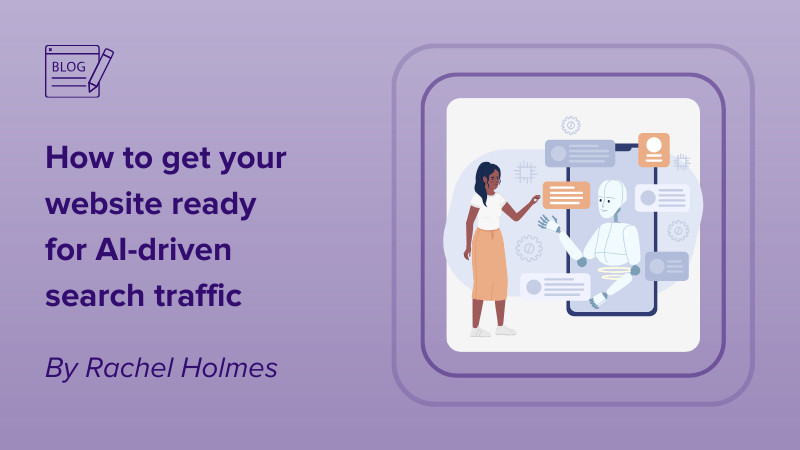
If you’ve been keeping an eye on how people are finding your business lately, you might have noticed a new trend: buyers are no longer just Googling, scrolling LinkedIn, or clicking ads. They’re asking AI tools like ChatGPT, Perplexity, Copilot, and Gemini before they ever get near your website.
In fact, some businesses are already reporting inbound leads that trace back to AI prompts. That’s a pretty big shift, and one we can’t afford to ignore.
Find out what this trend means for your B2B marketing strategy and website performance.
Why AI-driven traffic matters
The way buyers search is evolving. Instead of typing keywords into search engines, they’re asking conversational questions in AI tools. These platforms don’t just serve a list of links; they summarise, recommend, and sometimes directly name businesses.
That means if your brand isn’t showing up in AI-generated answers, you could be invisible to a growing pool of prospects. On the flip side, if you are being mentioned, it could create a stream of high-intent traffic you never planned for.
There are three main steps you can follow to embrace this change in behaviour.
Step 1: Track your AI-driven traffic
Start by figuring out how much of your current demand is already coming from AI. A few practical ways to do this include:
- Referral tracking: Use UTM parameters or visitor tracking tools such as Lead Forensics to spot traffic referred from AI-powered platforms.
- Search insights: Look for AI-related keywords in your analytics reports.
- Ask directly: Add a “How did you hear about us?” field in forms or chatbot interactions. You might be surprised how many say “ChatGPT” or “Perplexity.”
- Personalize: Are you using website personalization tools? If not, now’s the time. You can tailor experiences for first-time AI visitors vs returning ones and create highly relevant experiences that are formatted to be AI-friendly.
Step 2: Understand AI visitor behaviour
It’s not just about traffic volume; you’ll want to know whether AI-driven visitors are actually engaging.
You can do this by looking at the following metrics:
- Check bounce rates and time on page: If visitors land and leave quickly, your content may not resonate with what they were expecting to see when they followed the link from their AI tool.
- Look at conversions: Are AI-driven users filling out forms or booking demos? If not, experiment with CTAs and social proof to see if you can improve those conversions.
- Spot gaps: Pay attention to the questions prospects bring with them. If they’re asking AI something that your site doesn’t answer, that’s a clear opportunity that you can fill with blog or other content.
Step 3: Make your content AI-friendly
AI tools love structured, skimmable content they can easily pull from. To increase your chances of being included in answers, try these tips:
- Use question-based subheadings (e.g. How does website personalization boost B2B sales?).
- Keep content clear and scannable with bullet points and takeaways.
- Build FAQ pages around the top queries in your space, as these are easy for AI tools to cite.
Where is this heading?
We’re at a real turning point. AI isn’t just a shiny tool in the background anymore; it’s starting to directly influence demand generation. The challenge now is figuring out how to optimise AI alongside brand and ABM campaigns or even product launches, without getting lost in the noise.
The businesses that adapt quickest will be the ones that not only show up in AI-driven answers but also know how to capture and convert that traffic once it hits their site.
There’s a huge opportunity here. But the question is, are you ready to make it work for you?
If you’re ready to start personalizing for AI-referred visitors – or other audiences – we’re here to help you do this successfully.
 Blog
Blog